
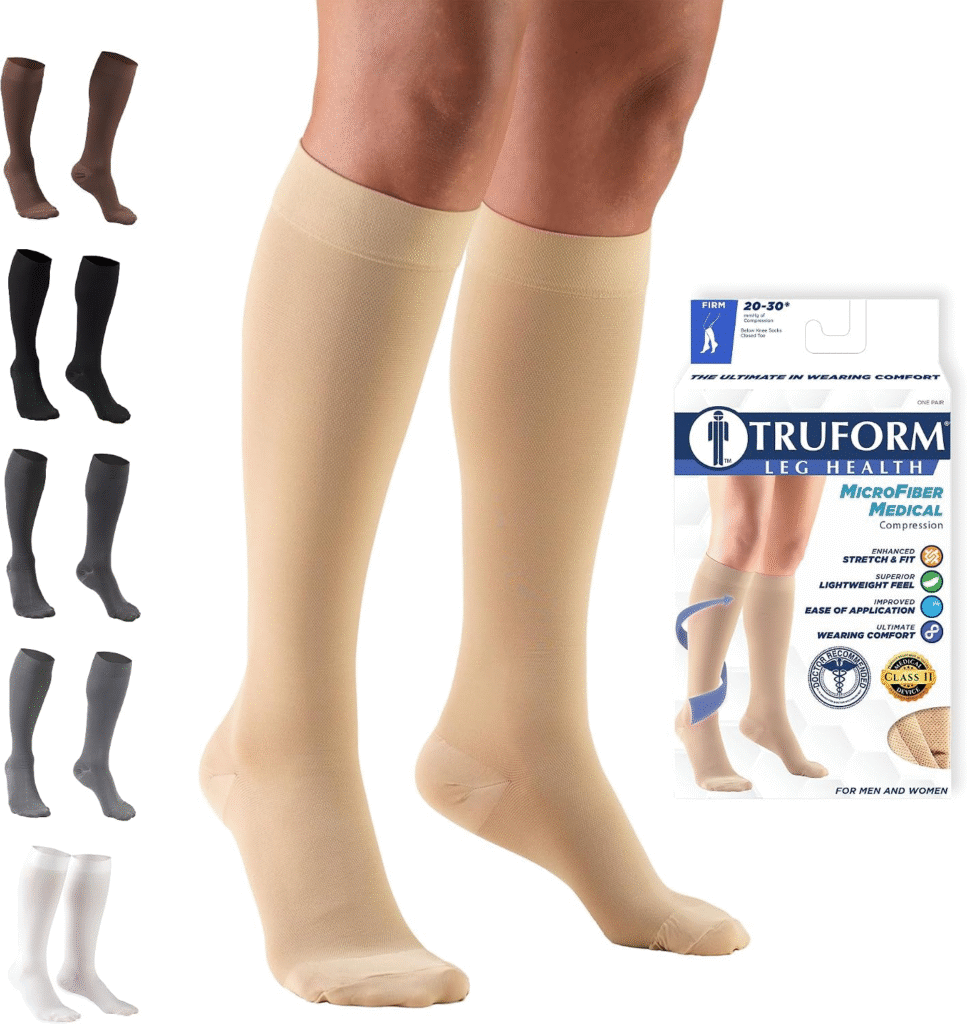
Varicose veins can make your legs feel tired, heavy, swollen, or uncomfortable, particularly after a long day. Although these enlarged veins are often harmless, their symptoms can interfere with daily activities. One commonly used option for managing these symptoms is compression stockings for varicose veins.
Compression stockings are specially designed garments that apply controlled pressure to the legs. They are different from regular socks because their pressure is carefully distributed to support circulation. When selected and worn correctly, they may help some people manage swelling and discomfort associated with vein problems.
What Are Varicose Veins?
Varicose veins are enlarged veins that usually appear close to the surface of the skin. They are often blue, purple, or skin-colored and may look twisted or raised.
They commonly develop in the legs because the veins have to move blood upward against gravity. Inside healthy leg veins are valves that help prevent blood from flowing backward. If these valves become weak or damaged, blood can collect in the veins and contribute to their enlargement.
Some people with varicose veins have no symptoms. Others may experience aching, heaviness, swelling, itching, or tiredness in the legs.
What Are Compression Stockings?
Compression stockings are elastic garments designed to apply pressure around the legs. Most medical compression stockings use graduated compression, meaning the pressure is generally greatest around the ankle and decreases farther up the leg.
This design is intended to support the movement of blood through the veins.
Compression stockings are available in several lengths, pressure levels, fabrics, and styles. Some look similar to ordinary socks, while others are designed specifically for medical use.
How Can Compression Stockings Help?
The main purpose of compression stockings is to provide external support to the legs. For people experiencing symptoms related to varicose veins, this may help reduce discomfort and swelling.
When pressure is applied to the lower legs, it can support the veins and surrounding tissues. This may make it easier for blood to move upward rather than remaining pooled in the lower limbs.
Compression stockings may be particularly useful for people who spend many hours sitting, standing, traveling, or working on their feet.
Choosing Compression Stockings for Varicose Veins
Choosing the right compression stockings involves more than selecting a preferred color or style. The compression level and size are especially important.
Compression strength is commonly described in millimeters of mercury, or mmHg. Different levels are intended for different purposes.
Some people may only need lighter compression for everyday support, while others may require a higher level based on their symptoms or medical condition.
If you have significant varicose veins or an underlying circulation problem, ask a healthcare professional before selecting stronger compression.
Measuring for the Right Size
A good fit is essential. Compression stockings need to sit securely against the skin without becoming painfully tight.
Depending on the product, you may need measurements around the ankle, calf, and thigh. Some manufacturers also provide length measurements.
Take measurements according to the brand’s instructions. Don’t assume that your normal sock size will automatically correspond to your compression-stocking size.
A properly fitted stocking should stay in place without rolling, bunching, or creating uncomfortable pressure points.
When Is the Best Time to Put Them On?
Many people find it easier to put compression stockings on in the morning. Leg swelling may become more noticeable later in the day, which can make the stockings harder to put on.
Before putting them on, make sure your legs are dry. Gradually work the stocking up the leg and smooth out any wrinkles.
Avoid creating folds or rolling the top down because uneven pressure can be uncomfortable.
Wearing Compression Stockings During the Day
Compression stockings are often worn during daytime activities. They can be particularly useful during periods when you expect to spend a lot of time standing or sitting.
For example, someone who works at a desk may wear them during the workday, while someone who works in a job that requires prolonged standing may use them for additional leg support.
Your individual wearing schedule should depend on the product instructions and any advice provided by your healthcare professional.
Compression Stockings and Exercise
Staying physically active is generally an important part of maintaining healthy circulation. Walking and regular movement can help prevent your legs from remaining in the same position for long periods.
Some people choose to wear compression garments during exercise, but this isn’t necessary for everyone. If you’re considering compression stockings specifically for exercise while managing varicose veins, choose a product designed for the activity and make sure it fits properly.
If exercise causes significant pain or swelling, seek professional advice rather than relying only on compression garments.
Caring for Your Compression Stockings
Proper care can help maintain the elasticity and effectiveness of compression stockings.
Follow the washing instructions provided by the manufacturer. Avoid methods that could damage the elastic fibers, such as excessive heat, unless the product specifically allows it.
Inspect your stockings regularly for holes, thinning areas, stretched fabric, or other signs of wear.
A damaged or overly stretched stocking may not provide consistent compression.
Common Mistakes to Avoid
A few simple mistakes can reduce comfort or effectiveness.
Choosing the wrong size: A poor fit can make compression uncomfortable and may prevent the garment from working as intended.
Using too much compression without advice: Stronger compression isn’t necessarily better.
Leaving wrinkles in the fabric: Bunching can create uneven pressure.
Rolling the stocking down: This can create a tight band around the leg.
Ignoring unusual symptoms: Compression stockings should not be used to mask serious or unexplained changes in your legs.
Can Compression Stockings Prevent Varicose Veins?
Compression stockings may help manage symptoms, but they are not guaranteed to prevent varicose veins from developing.
Factors such as age, genetics, pregnancy, prolonged standing, and other health-related factors can contribute to varicose veins.
Compression garments are therefore best viewed as one potential tool for symptom management rather than a complete solution.
Are Compression Stockings Right for Everyone?
Not necessarily. People with certain circulation conditions may need professional assessment before using compression.
If you have significant swelling, unexplained leg pain, skin changes, or a known condition affecting blood flow to your legs, talk with a healthcare professional before purchasing compression stockings.
Medical guidance is particularly important if you are unsure which compression level to use.
Final Thoughts
Compression stockings for varicose veins can provide useful support for people experiencing symptoms such as leg swelling, aching, heaviness, and tiredness. Their graduated pressure is designed to support circulation and may make everyday activities more comfortable.
The right size, compression level, and style all matter. For mild symptoms, an appropriate compression garment may be a convenient addition to a daily routine, while people with more significant vein or circulation problems should seek professional guidance.
Compression stockings don’t eliminate existing varicose veins, but with proper use, they can be a practical part of managing symptoms and supporting comfortable, active legs.